The Untold Story of Hindus Before Operation Polo, Bhagyanagar Liberation Day
From the very outset, the Princely State of the Nizamite Hyderabad was a grotesque apparition, a make-believe creation. It was an accident of history from which a shrewd Islamic careerist profited immensely.
Six years after Aurangzeb’s death, a sizeable number of factions in the Mughal court sniffed great opportunity to carve out whatever portions of the now- shattered Empire they could for themselves. Throughout its dark history, the Mughal Empire was sustained by these factions and cliques. One such powerful faction was the Turanis, originally hailing from Turan in Central Asia.

No Roots in History
In 1713, the nominal Mughal emperor “appointed” Chin Qilich Khan or Asaf Jah as the Subedar of the Deccan and awarded him the title, Nizam-ul-Mulk (Regulator of the Islamic Realm). The extent of Deccan comprised the vast tract from Malwa to Tiruchinapalli.
This was the perfect opportunity for Asaf Jah.
As the vestiges of Mughal power declined with each day and as the Marathas, the British and the French began gobbling away its territories, Asaf Jah maintained the façade of loyalty to the Mughals but had stopped paying tributes to it long ago. This is the brief story of the origin of the so-called Hyderabad “State,” which K.M. Munshi describes as having “no roots in history,” and “at no time had Hyderabad been independent.”
Indeed, throughout its sordid existence, the Hyderabad “State” was in the grip of some or the other powerful political power. Its successive Nizams were skilled in the art of intrigue and double-crossing friends and protectors. In no particular order, they betrayed the French, the British, the Marathas, Hyder Ali, and Tipu Sultan as a matter of habit. Warren Hastings gives the most accurate description of the character of the Nizams:
And so, the British called his bluff and stationed a Resident in Hyderabad and installed a powerful military contingent to ensure that he didn’t commit any mischief again. This action had the intended consequences. The Nizams didn’t dare raise a finger against the British. But what they did as titular rulers was to Islamize the entire dominion through brute force. Munshi characterizes their rule as one of intrigue, licentiousness and oppression of the eighty-six percent of their Hindu population. Indeed, the Nizams had imbibed the lessons of effective oppression from their former Mughal masters really well. Extorting revenue from the already-impoverished subjects was their specialty. Here is an eyewitness account from Sir John Malcolm:
Indeed, for nearly the entire duration of their hold on Hyderabad, the British kept it under a tight leash for this precise reason. Barring the brief ray of light under the Anglicized Salar Jung, every Nizam was a hardcore Islamic bigot and Mir Osman Ali’s bigotry was thickly steeped in delusion despite the fast-changing realities around him. His greatest and lifelong ambition was to convert Hyderabad into an independent Islamic State even before Jinnah had conceived his Pakistan project.
Terrorising the Hindu Majority
Mir Osman Ali’s delusion was primarily based on the fact that he had completely terrorized his majority Hindu subjects into submission. The spirit of Hindus under his regime had truly fallen into the pits. This reality also fuelled the Nizam’s fantasy of becoming the head of the entire Muslim world. However, when the Western powers permanently crushed the Ottoman Empire, the Nizam was heartbroken. Munshi narrates what happened next:
To give the most representative flavour of how meekly slavish the Hindus had become under the Nizam’s tyranny, we have this grovelling poem by Sarojini Naidu glorifying him.
Beneath whose sway concordant dwell
The peoples whom your laws embrace,
In brotherhood of diverse creeds,
And harmony of diverse race
So many the lustre of your days
Outshine the deeds of Firdausi sung,
Your name within a nation’s prayer,
your music on a nation's tongue.
Indeed, there appears to be a fundamental psychological reason Sarojini Naidu was attracted to Nawab Nehru. Like Nehru had imbibed and was fond of the Allahabad Muslim aristocratic lifestyle, Sarojini was “steeped in the traditions of the Muslim aristocracy in Hyderabad.”
Muslim Aristocracy Monopolises the Administration
Needless, this aristocracy pretty much conformed to the medieval Muslim aristocracy about which we have written earlier. However, this aristocracy now lived in a vastly changed climate with the British yoke upon them. But to maintain their lifestyle, status and the careers of their sons, they had to constantly oppress their Hindu subjects and monopolise all administrative power. Seventy-five percent of officialdom was in the hands of Muslims who in Munshi’s words were “traditionally corrupt, unsympathetic to the people and irksome in their aggressive communalism. The Police and the military services were 95% Muslim.
The Pathetic Plight of Hindus
Here are some contours of the pathetic plight of Hindus under such a regime.
The higher officialdom actively encouraged the lower rungs to keep up the pressure on and harassment of Hindus. The threat and enforcement of physical violence against Hindus could happen at any time often under invented pretexts. Hindus were prevented from building or repairing a temple in any locality where Muslims resided. Temples were often desecrated without provocation and culprits were “rarely traced, and if traced, never punished.” Hindu Swamis and saints were prohibited from delivering discourses, whereas members of the Muslim Ulema, and later, the Ittehad went on a rampage of converting Hindus to Islam.
Akbar Hydari
The name of Akbar Hydari deserves special mention. He served a long stint as the Finance Minister of Hyderabad and was later elevated as Prime Minister. One of the first things he did was to snuff out the sizeable number of Hindu employees in the Public Works Department and the Accounts Department. He eventually extended this witch hunt to other departments. After this, he cast his vulture-eye on the private sector. With the obvious blessings of the Nizam, he unilaterally announced the nationalization of several key industries in the State. As a result, the State acquired a 51% stake in massive industrial outfits painstakingly built up by the Hindus. The whopping revenue from all these businesses went to fund the terrorist activities of the Ittehad and later, the fanatical Razakkarshe Plight of Hindus Under the Nizam's Regime

From the very outset, the Princely State of the Nizamite Hyderabad was a grotesque apparition, a make-believe creation. It was an accident of history from which a shrewd Islamic careerist profited immensely.
Six years after Aurangzeb’s death, a sizeable number of factions in the Mughal court sniffed great opportunity to carve out whatever portions of the now- shattered Empire they could for themselves. Throughout its dark history, the Mughal Empire was sustained by these factions and cliques. One such powerful faction was the Turanis, originally hailing from Turan in Central Asia.
Hyderabad “State” was in the grip of some or the other powerful political power. Its successive Nizams were skilled in the art of intrigue and double-crossing friends and protectors. In no particular order, they betrayed the French, the British, the Marathas, Hyder Ali, and Tipu Sultan as a matter of habit. Warren Hastings gives the most accurate description of the character of the Nizams:
Muslim Aristocracy Monopolises the Administration
Needless, this aristocracy pretty much conformed to the medieval Muslim aristocracy about which we have written earlier. However, this aristocracy now lived in a vastly changed climate with the British yoke upon them. But to maintain their lifestyle, status and the careers of their sons, they had to constantly oppress their Hindu subjects and monopolise all administrative power. Seventy-five percent of officialdom was in the hands of Muslims who in Munshi’s words were “traditionally corrupt, unsympathetic to the people and irksome in their aggressive communalism. The Police and the military services were 95% Muslim.”
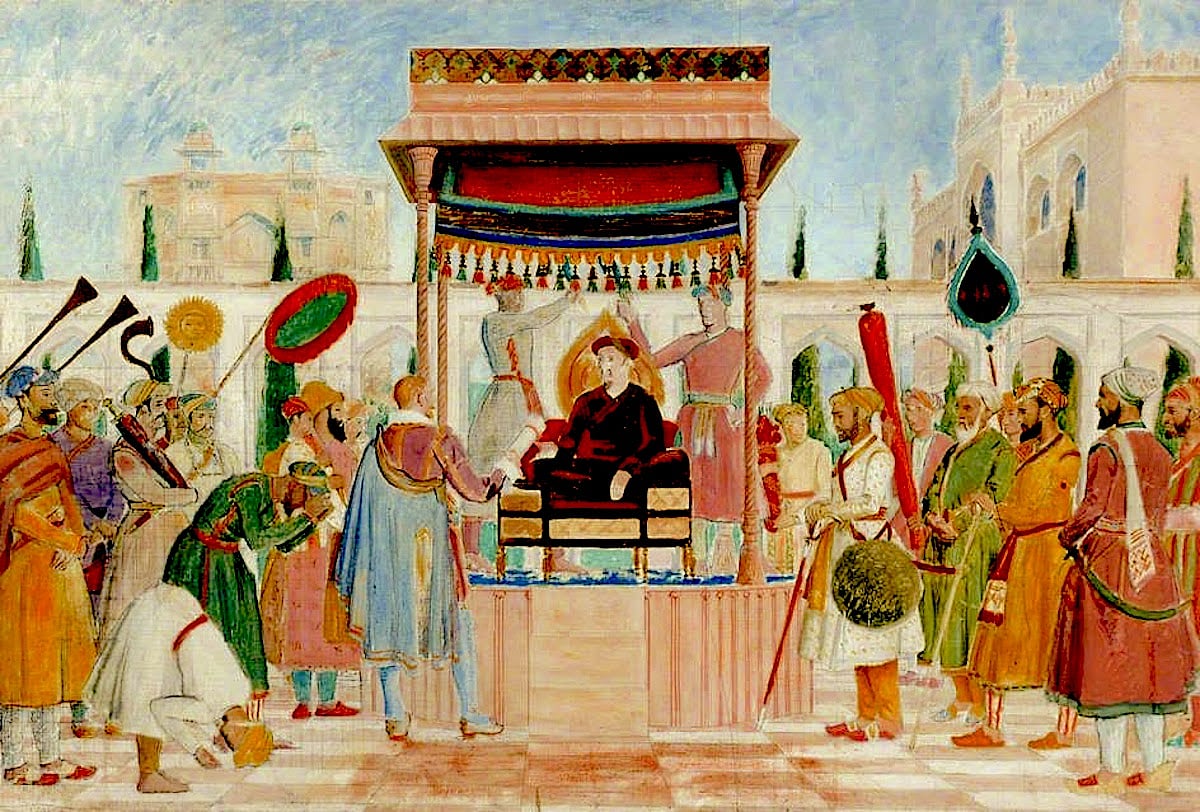
The Pathetic Plight of Hindus
Here are some contours of the pathetic plight of Hindus under such a regime.
The higher officialdom actively encouraged the lower rungs to keep up the pressure on and harassment of Hindus. The threat and enforcement of physical violence against Hindus could happen at any time often under invented pretexts. Hindus were prevented from building or repairing a temple in any locality where Muslims resided. Temples were often desecrated without provocation and culprits were “rarely traced, and if traced, never punished.” Hindu Swamis and saints were prohibited from delivering discourses, whereas members of the Muslim Ulema, and later, the Ittehad went on a rampage of converting Hindus to Islam.
Hindus as a Statutory Minority
This horrid condition excludes the other terrorist acts against Hindus committed later by the likes of Mahmud Nawaz Khan, founder of the Majilis-i-Ittehad-ul-Mussulmeen (the pre-independence incarnation of Asaduddin Owaisi’s AIMIM). He was succeeded by the ultra-fanatic Bahadur Khan (Jung) who “insisted that Hyderabad should be declared a Muslim State.” This “demand” received a booster dose when Jinnah stepped in and proclaimed that the 87% Hindu majority in the State of Hyderabad should be reduced to a statutory minority. In “independent” India, one of the most chilling methods of reducing Hindus to a statutory minority was the passage of the dreaded Right to Education Act. One can unearth scores of such parallels from the history of India of the last century. The findings will make your blood run cold.
And then, thankfully, Operation Polo happened. To this, our eternal gratitude goes to Sardar Patel who gave the order and to K.M. Munshi, the surgeon who removed this cancer in India’s belly. We can conclude this series by quoting Munshi’s words about the indomitable Sardar in a different but equally significant civilizational context


